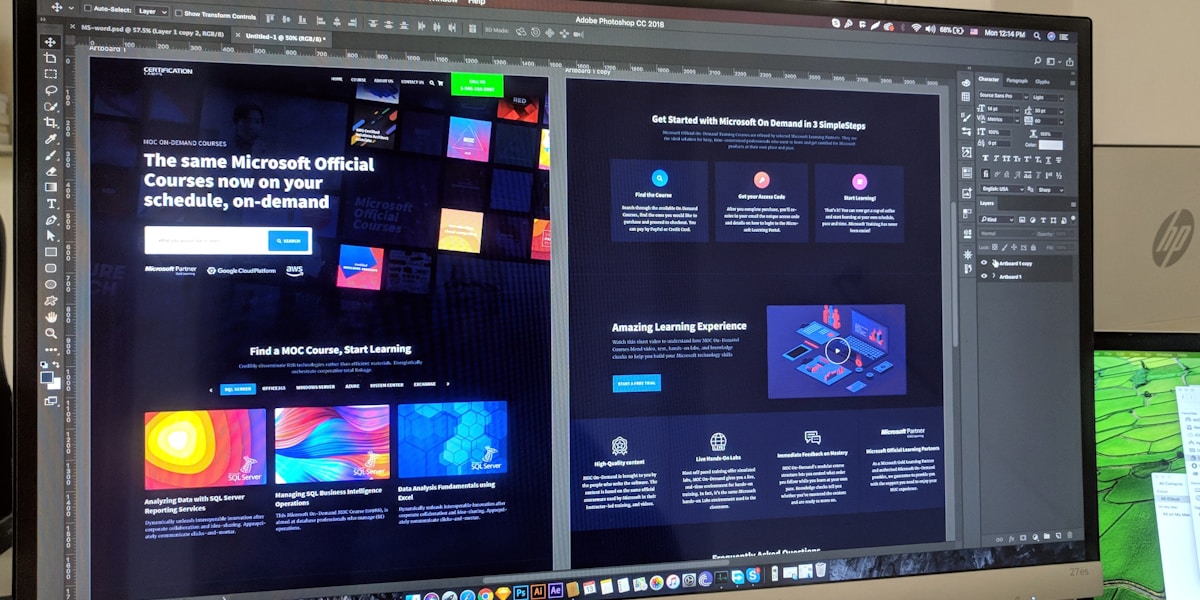
A landing page is often the first impression potential customers have of your business. Wheth er they arrive from a Google ad, social media campaign, or email newsletter, y our landing page has one critical job: converting visitors into leads or custo mers. In today's competitive digital landscape, simply having a landing page i sn't enough—you need one that is strategically designed to guide users toward a specific action.
Start with a Clear Value Proposition
Your hea dline is the most important element on your landing page. Within seconds, visi tors should understand exactly what you offer and why it matters to them. A st rong value proposition speaks directly to your target audience's pain points a nd presents your solution as the answer they've been searching for. Avoid vagu e or clever headlines that confuse rather than clarify. Instead, use clear, be nefit-driven language that communicates tangible results. Your subheadline sho uld support the main headline by providing additional context and reinforcing the primary benefit.
Design for Visual Hierarchy and Flow
Effect ive landing pages guide visitors through a logical journey from awareness to a ction. Use visual hierarchy to direct attention to the most important elements first. Your headline and primary call-to-action should be prominently position ed above the fold. White space is your friend—cluttered designs overwhelm visi tors and dilute your message. Stick to a clean, focused layout with plenty of breathing room around key elements. Use contrasting colors strategically to ma ke your CTA buttons stand out, and ensure your design guides the eye naturally from one section to the next.
Create Compelling Calls-to-Action
Your call-to-action is where conversions happen. Every element of your CTA mat ters, from the button color and size to the text itself. Use action-oriented l anguage that tells visitors exactly what will happen when they click—phrases l ike "Get My Free Quote," "Start My Trial," or "Download the Guide" outperform generic text like "Submit" or "Click Here." Position your primary CTA prominen tly and repeat it throughout longer pages. Minimize friction by asking only fo r essential information in your forms. The more fields you require, the more l ikely visitors are to abandon the process.
Build Trust with Social Proo f
Trust is the foundation of conversion. Visitors need to feel confiden t that your business is legitimate and capable of delivering on its promises. Incorporate trust signals throughout your landing page, including customer tes timonials, case studies, client logos, and industry certifications. Video test imonials can be particularly powerful, as they add authenticity and emotional connection. Display security badges near payment forms or data collection fiel ds to reassure visitors their information is safe. Include specific, quantifia ble results when possible—numbers and statistics carry more weight than vague praise.
Optimize for Mobile Experience
With mobile traffic accou nting for more than half of all web visits, mobile optimization is non-negotia ble. Your landing page must deliver a seamless experience across all devices a nd screen sizes. Mobile users have different needs and behaviors than desktop users—they're often on-the-go and have less patience for slow-loading pages or complicated navigation. Ensure your page loads quickly by optimizing images an d minimizing unnecessary code. Use responsive design principles so content ref lows naturally on smaller screens. Make buttons large enough for easy tapping and forms simple enough to complete on a touchscreen.
Test, Analyze, an d Iterate
The most successful landing pages are never truly finished. C ontinuous testing and optimization are essential for maximizing conversion rat es. Implement A/B testing to compare different versions of headlines, images, CTAs, and form layouts. Use heatmaps and user recordings to understand how vis itors interact with your page and where they encounter friction. Analyze your metrics regularly—bounce rate, time on page, and conversion rate all provide v aluable insights. Small changes can yield significant improvements, so adopt a mindset of continuous refinement rather than set-it-and-forget-it.
Conc lusion
Designing an effective landing page requires a strategic blend o f compelling copy, thoughtful design, and data-driven optimization. By focusin g on a clear value proposition, intuitive visual hierarchy, persuasive calls-t o-action, trust-building elements, mobile responsiveness, and ongoing testing, you create landing pages that don't just attract visitors—they convert them in to valuable customers. Remember, your landing page is a living asset that shou ld evolve based on user feedback and performance data. Invest the time to get it right, and you'll have a powerful tool that drives business growth for year s to come.